Lubbock Artificial Turf
Artificial turf lawn in front of a brick home under a wide West Texas sky
Free quotes · Lubbock, TX

Lubbock Artificial Turf: Synthetic Grass, Putting Green & Pet Turf Installation in West Texas

Artificial grass lawns, backyard putting greens, pet turf, and playground surfaces, installed over a base built to drain. Tell us what you need and a local turf pro calls you back with a price.

Call (806) 630-0409

Get a Free Quote

Tell us about the yard and a local turf pro calls you back with a price. No obligation.

Free
On-Site Measure & Quote
Written
Price By The Square Foot
Local
Lubbock & The South Plains

Lubbock Artificial Turf is an artificial turf installation service for homeowners in Lubbock, Texas. We install synthetic grass lawns, backyard putting greens, pet turf and dog runs, playground surfaces, and pool and patio turf, front yard, back yard, side yard, or all three. Every job starts with a free on-site measure and a written price by the square foot.

Turf is a different job on the South Plains. Caliche and hardpan sit a few inches down in plenty of West Texas yards, January brings hard freezes, July brings triple-digit heat and steady wind, and watering limits make a natural lawn expensive to keep alive. That is why our installs start underneath the grass: the sub-base, the compaction, and the drainage decide how a yard looks in five years far more than the turf you pick on day one.

Why We're the Best Artificial Turf Installer in Lubbock, TX

Turf that fails almost never fails at the blades. It fails at the base, the seams, or the edge.

The base gets built right

Old sod out, then three to four inches of crushed base, wetted, compacted in lifts, and graded to fall away from the house. Compaction is what keeps a yard flat instead of rippled.

Turf spec'd for the job

A dog run, a putting green, and a front lawn need three different products. We match pile height, face weight, and blade shape to how each area actually gets used.

Seams and edges you can't find

Seams close on seam tape and adhesive with the grain running one direction across the yard. Perimeters fasten to bender board or a nailer board with galvanized spikes so corners never lift.

Drainage and infill that handle pets

Perforated backing over a free-draining base sends rain and rinse water straight through. Pet areas get antimicrobial or zeolite infill instead of plain silica sand, so a dog yard doesn't go sour in August.

Built for full West Texas sun

UV-stabilized fibers and a heat-tolerant backing matter more here than in most of the country. We spec turf rated for full sun so color holds on the south and west sides of the house.

Free measure, written price, no pressure

You get an on-site measure, a written price by the square foot, and the exact spec going in. If the number doesn't work, that's the end of it.

Want this level of detail on your own yard? Call (806) 630-0409 or get a free quote.

What Types of Artificial Turf Do We Install in Lubbock?

Each of these six jobs uses a different turf spec and a different base build.

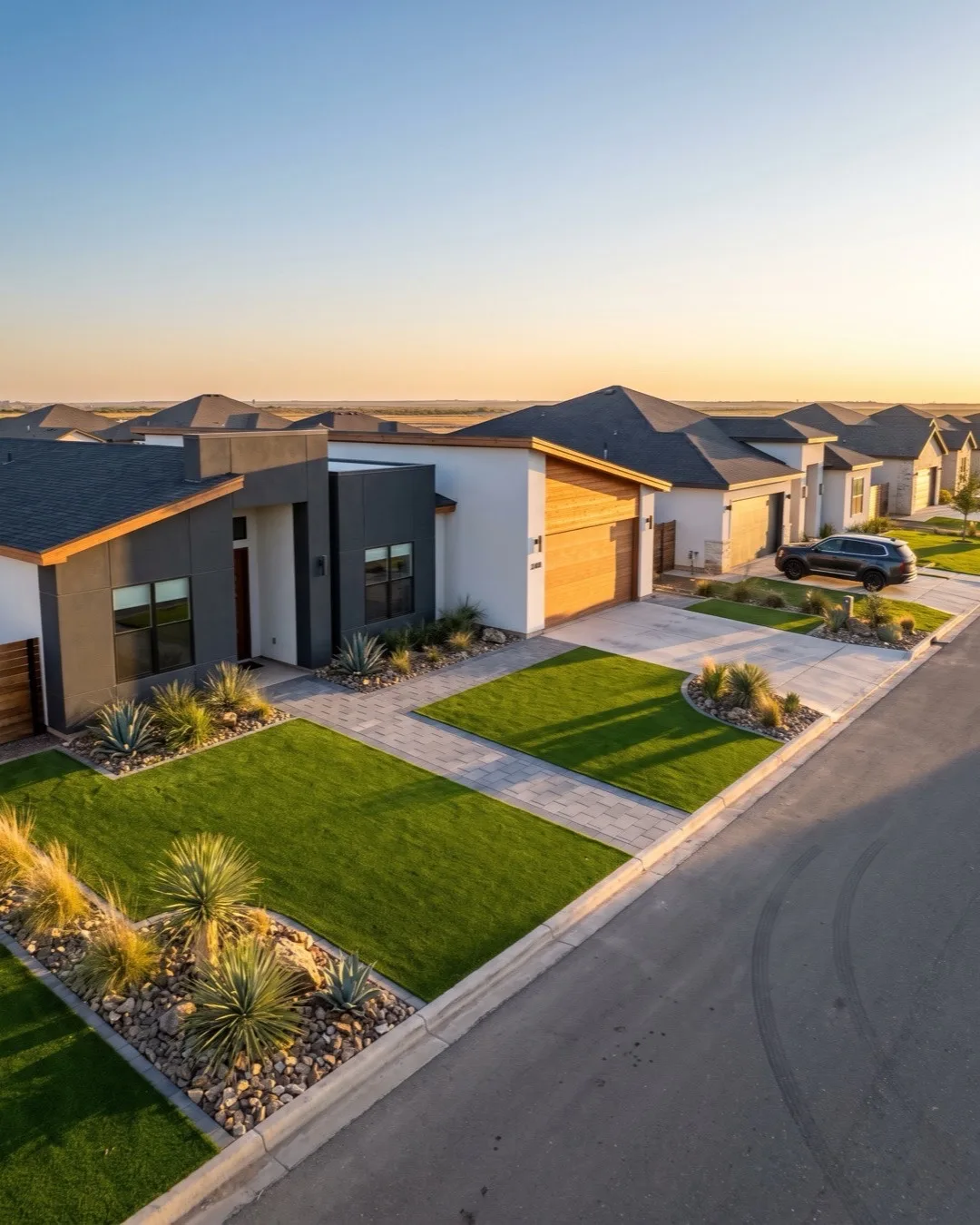
Artificial turf front lawns on a street of new homes in Lubbock, TX

Front & Back Yard Lawns

Old sod comes out, compacted crushed base goes in graded to drain, and landscape-grade turf around a 1.5 to 1.75 inch pile goes down over it. Front yards get clean cuts against the walk and the planting beds; back-yard seams run away from the patio door, so you are never looking down a line.

Ready to lose the mower for good?
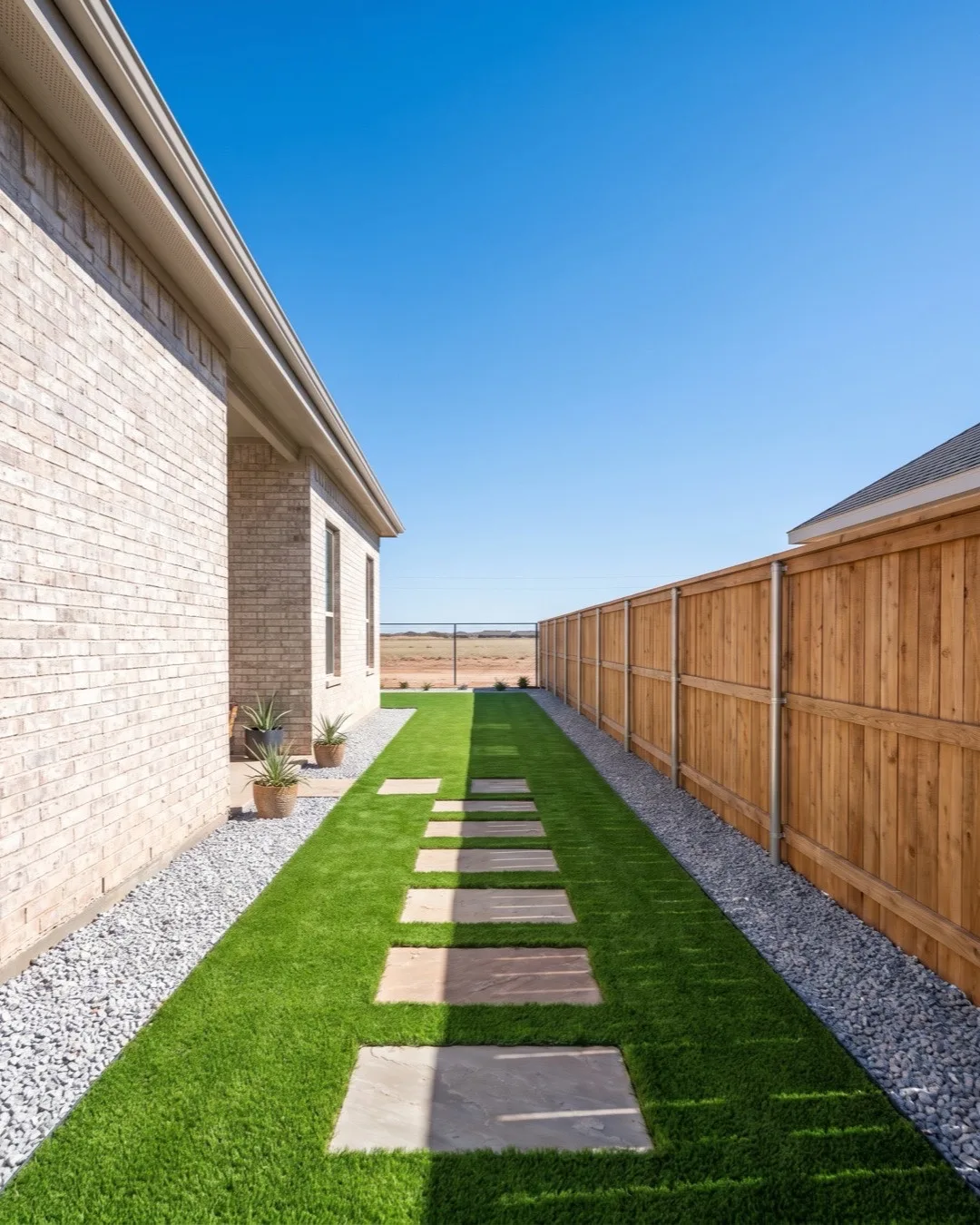
Side yard dog run in artificial turf with stepping stones and gravel borders

Pet Turf & Dog Runs

Pet turf is a different build: fully perforated backing for flow-through drainage, a base graded with no low spots to hold liquid, and an antimicrobial or zeolite infill instead of plain sand. Fibers are short and dense so nails don't snag. Rinse it with a hose, no mud in the house, no dead patches.

Need a yard your dogs can't wreck?
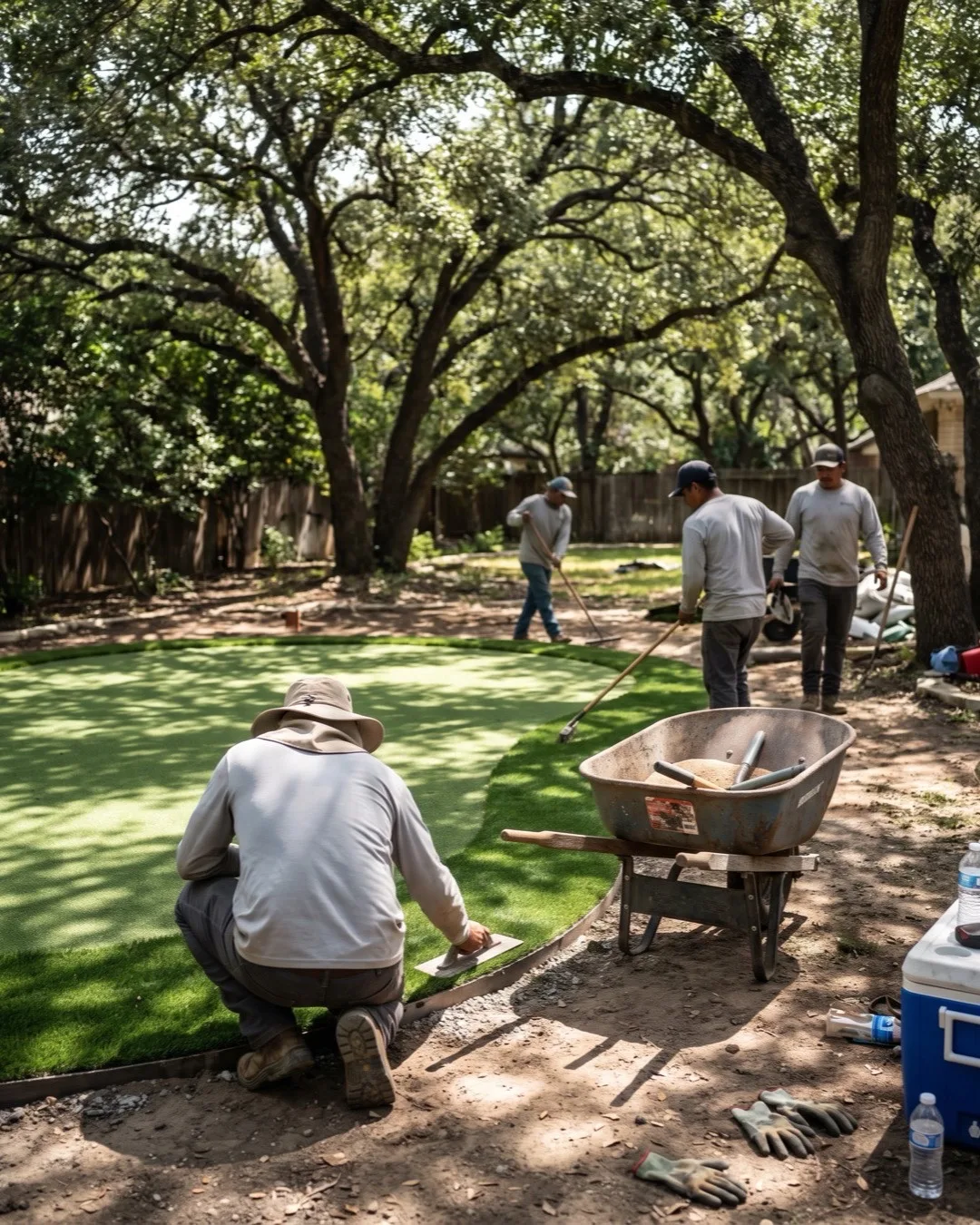
Crew installing a backyard artificial putting green under shade trees

Backyard Putting Greens

A putting green is built to a tighter tolerance than a lawn: short nylon pile, heavier sand infill, a laser-flat base rolled smooth, and contours built in where you want break. We cut the cups, add a taller-pile fringe collar, and set the green speed you ask for.

Want to putt at home every evening?
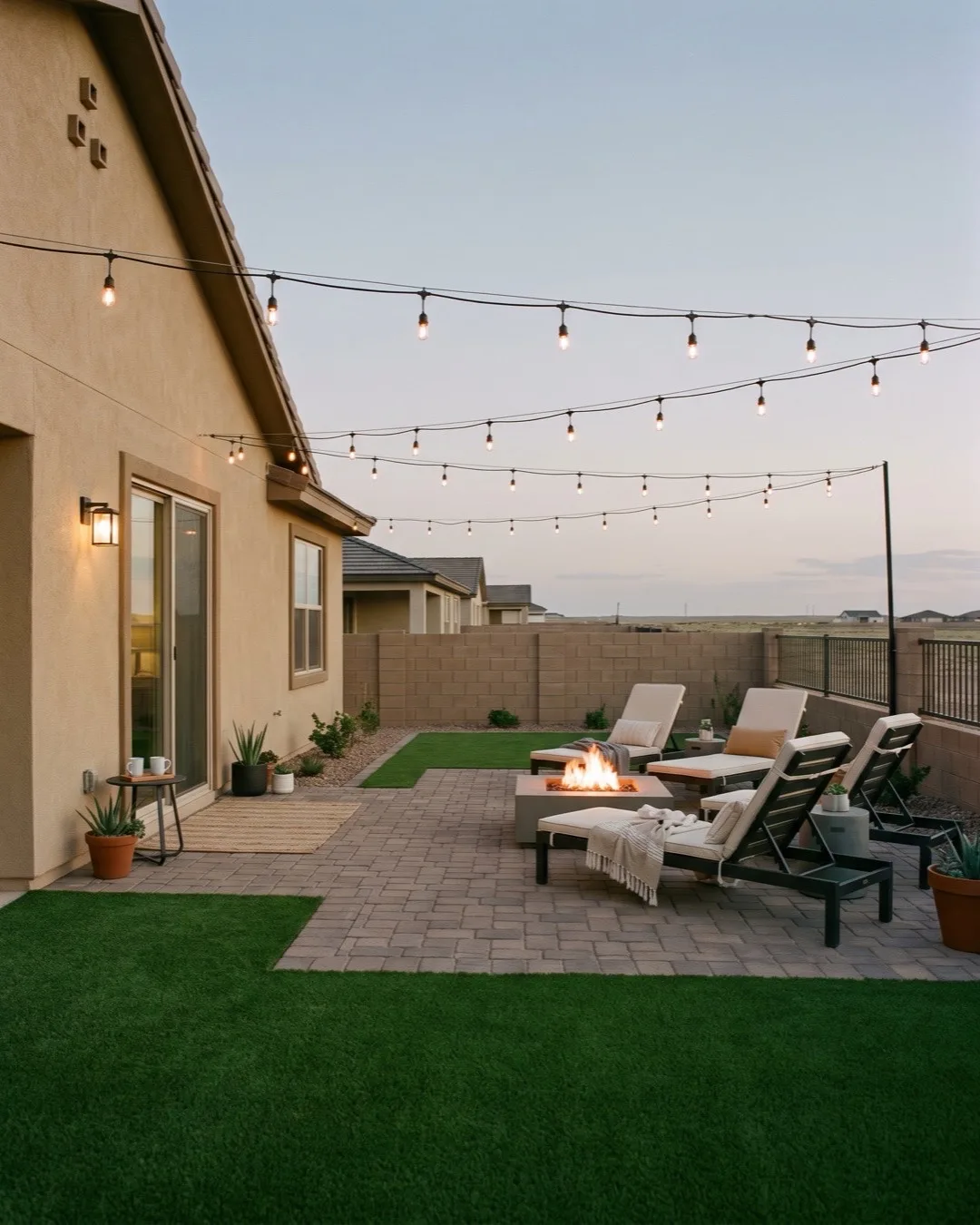
Back yard artificial turf lawn next to a covered patio

Playground & Play-Area Turf

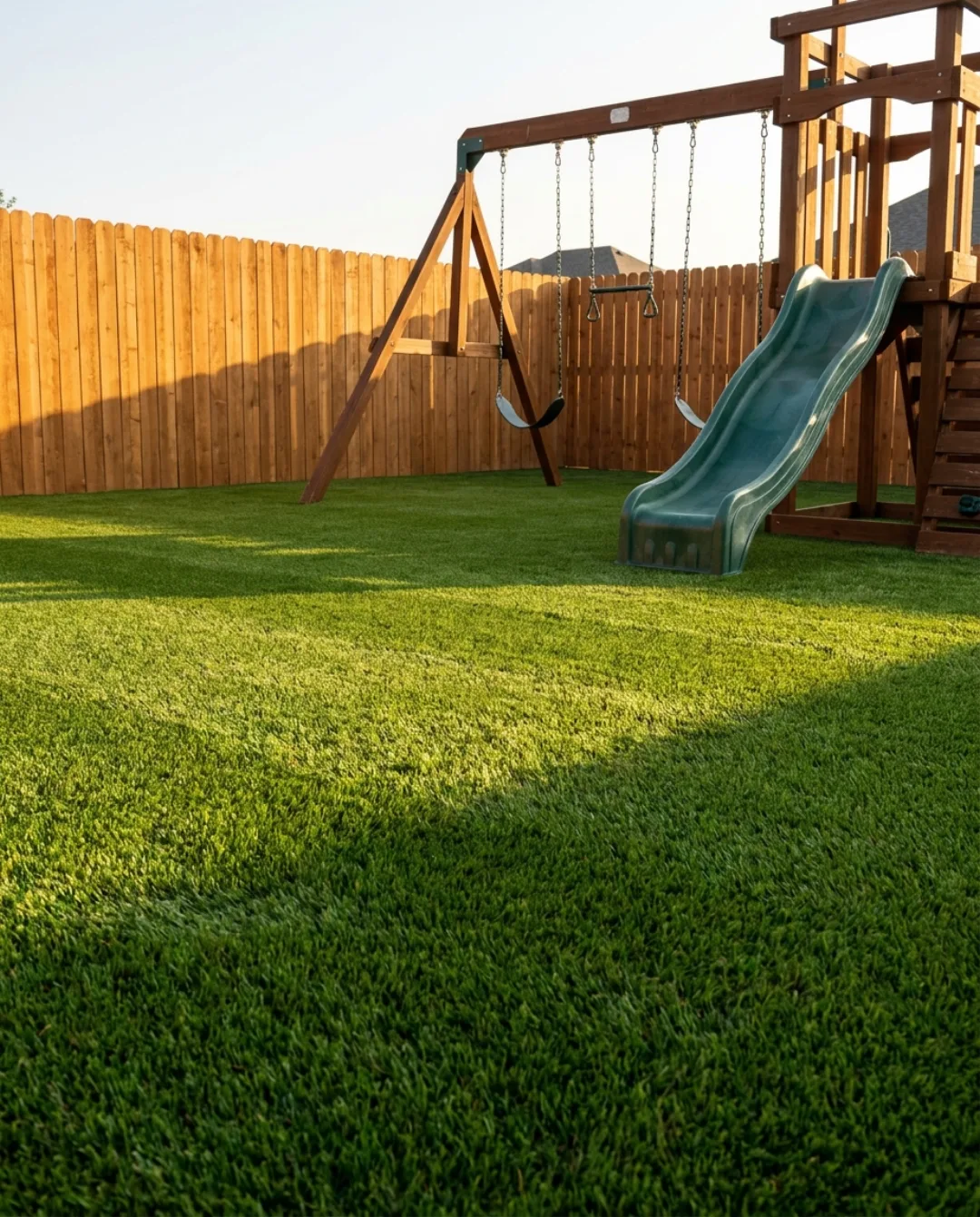
Play areas get a shock-absorbing foam pad under the turf and a softer, taller fiber on top, forgiving under a swing set and cooler underfoot than rubber mulch. Same drainage build as everything else, so rain goes through instead of pooling where the kids play.

Building a softer place to land?
Artificial turf running up to the coping around a backyard pool

Pool & Patio Turf

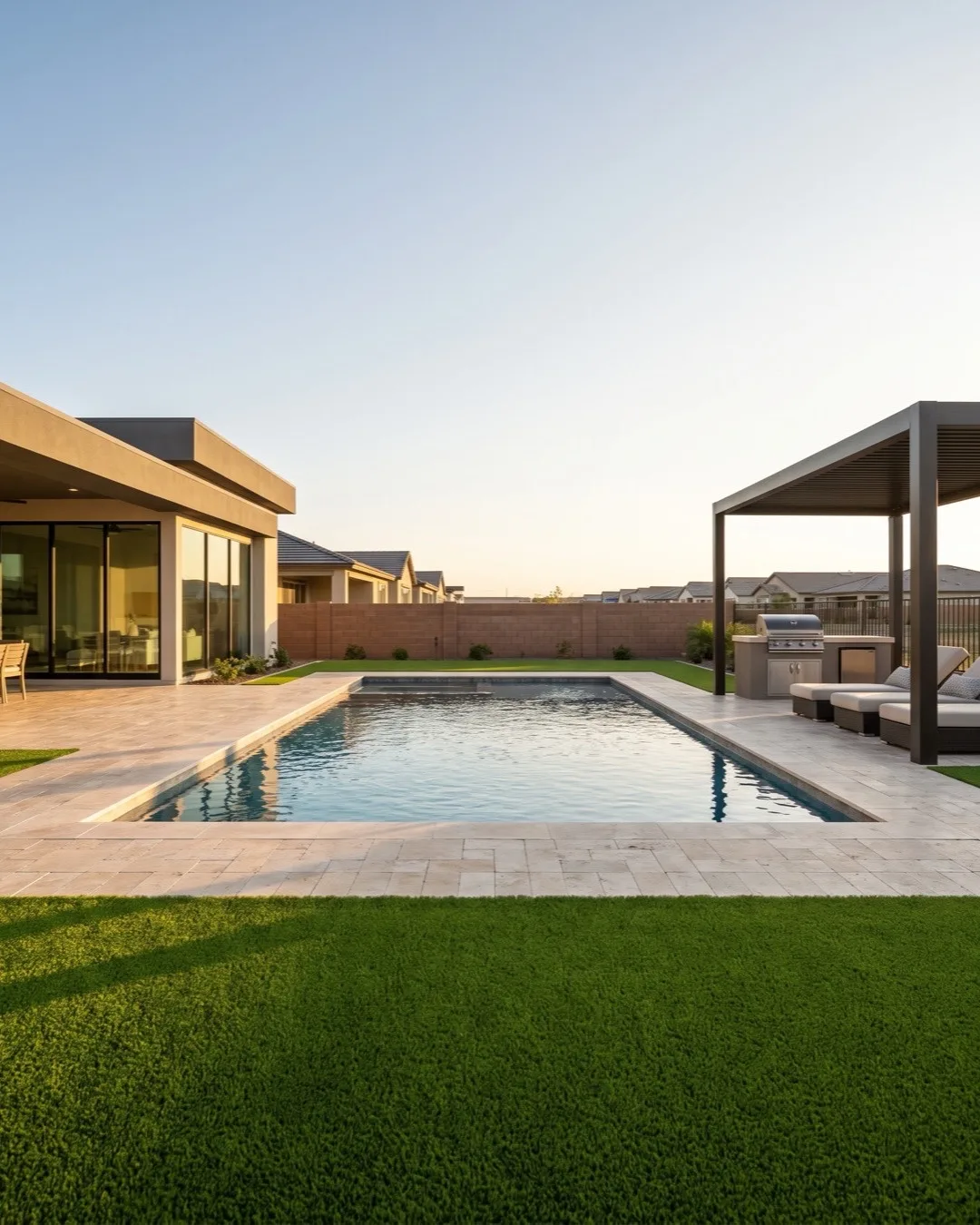
Turf around a pool has to shed water fast and put up with splash-out and chlorine. We keep the base free-draining, run the edge tight to the coping or the paver band, and use a fiber that doesn't hold heat the way a dark deck does.

Tired of clippings blowing into the pool?
Installer power brooming infill into artificial turf

Turf Cleaning, Repair & Infill Refresh

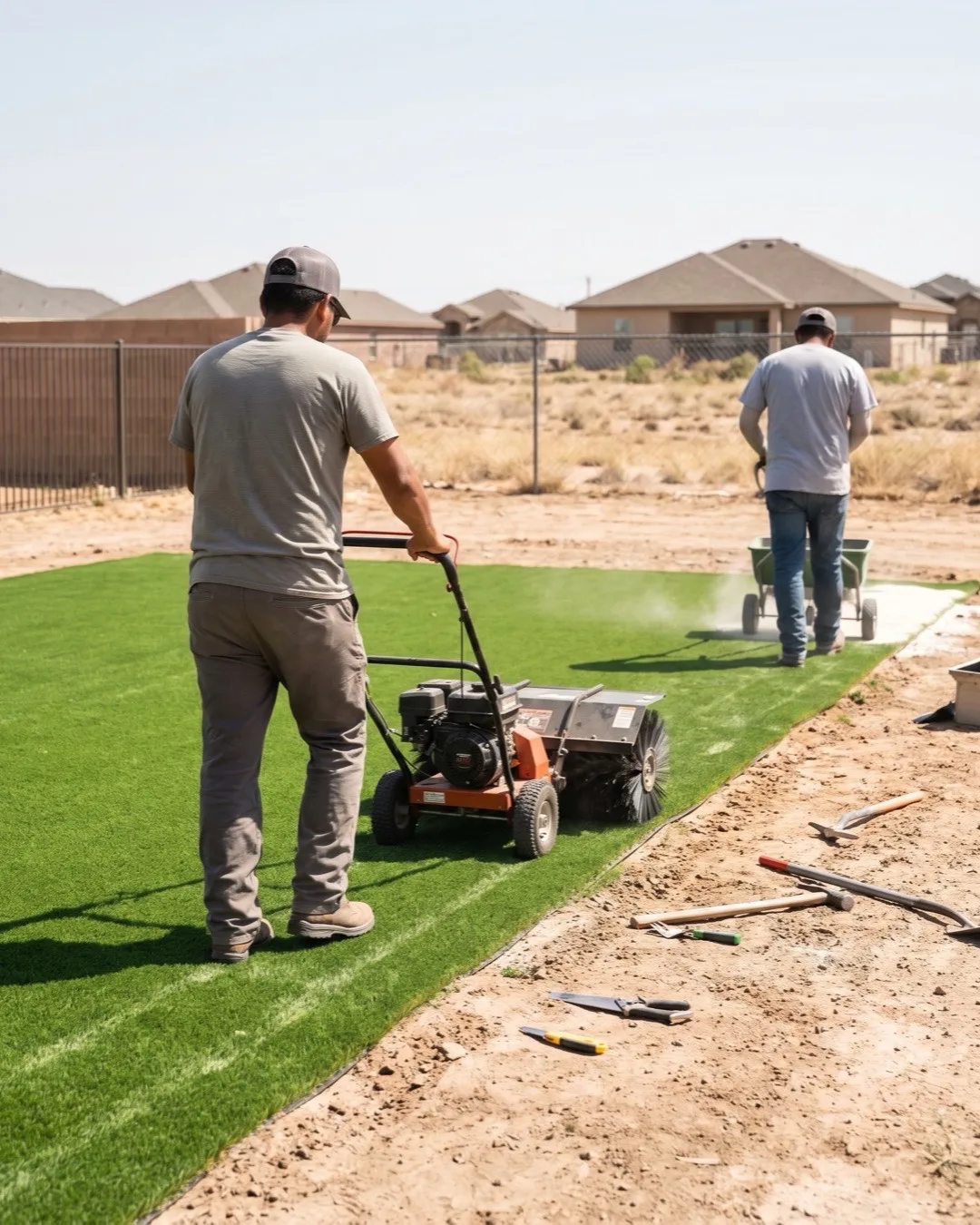
Already have turf? We power broom matted fibers upright, top off settled infill, re-glue open seams, re-fasten lifted edges, and deodorize pet areas. Older turf can often come back to looking new for a fraction of what replacing it costs.

Think your turf can be saved?

What Artificial Turf Problems Do We Fix?

Tired-looking turf usually has one of six specific things wrong, and most are repairable without replacing the yard.

Matted & Flattened Fibers

High-traffic paths mat down when infill settles below the blade line. Power brooming and an infill top-off stand the fibers back up; a walkway that keeps flattening wants a denser, heavier face-weight turf.

Seam Separation

A seam set on failing tape or starved of adhesive opens into a visible gap. We lift it, set fresh seam tape and adhesive, and close it with the grain one direction so the repair disappears.

Drainage Problems & Ponding

Water standing on turf is a base problem, not a turf problem: a low spot or a poorly compacted sub-base underneath. The fix is regrading the base, and in stubborn yards a french drain or drain box first.

Pet Odor Buildup

Plain silica sand holds urine, and a dog yard on the wrong infill goes sour by late summer. We deodorize the area and swap the infill to a zeolite or antimicrobial blend over a free-draining base.

Sun-Faded Turf

Fiber that isn't UV-stabilized washes out fastest on south- and west-facing exposures. Faded turf doesn't recover; the fix is replacing that section with a fiber rated for full sun.

Lifted Edges & Corners

Edges glued to soil or pinned too sparsely curl first at the corners, then trip people. We re-fasten the perimeter to bender board or a nailer board with galvanized spikes at close spacing.

What Turf and Infill Do We Install?

"Artificial turf" is not one product. Pile height, face weight, backing, and infill each get chosen for the job.

Pile Height & Blade Shape

Landscape lawns run about a 1.25 to 2 inch pile; putting greens run a short, dense pile around half an inch so the ball rolls true; pet turf sits in between so nails don't snag. Blade shapes like C-shape and W-shape resist matting better than flat blades.

Face Weight & Density

Face weight is ounces of yarn per square yard, most landscape turf falls roughly in the 50 to 90+ ounce range. Heavier, denser turf costs more per roll, feels fuller, and lasts longer under traffic.

Turf Backing & Drainage

Under the blades is a woven backing sealed with a latex or polyurethane coating. Standard backings drain through punched holes; pet systems use a fully permeable flow-through backing so liquid exits everywhere.

Infill: Silica, Antimicrobial & Zeolite

Infill ballasts the turf and stands the blades up. Silica sand is the standard for lawns; antimicrobial coated-sand and zeolite blends control odor in pet areas; putting greens take a heavier sand fill; playgrounds add a foam shock pad under the turf itself.

Our 5-Step Artificial Turf Installation Process

Most residential yards follow the same five steps, whether it's a 200-square-foot dog run or the whole back yard.

Installers seaming two rolls of artificial turf together
  1. Free on-site measure and turf selection

    We measure the area, watch where water runs, and check what's under the grass. You see samples of the pile heights and infills that suit the job and leave with a written price by the square foot.

  2. Demolition and excavation

    Old sod, roots, and three to four inches of soil come out. Sprinkler heads get capped and lines marked. Anything that would telegraph through the turf later, rock, stumps, old edging, comes out now.

  3. Base build and grading

    Crushed base goes in, wetted and compacted in lifts with a plate compactor, graded to fall away from the house and toward where water should go. This step decides whether the yard is still flat in five years.

  4. Turf layout, seaming and fastening

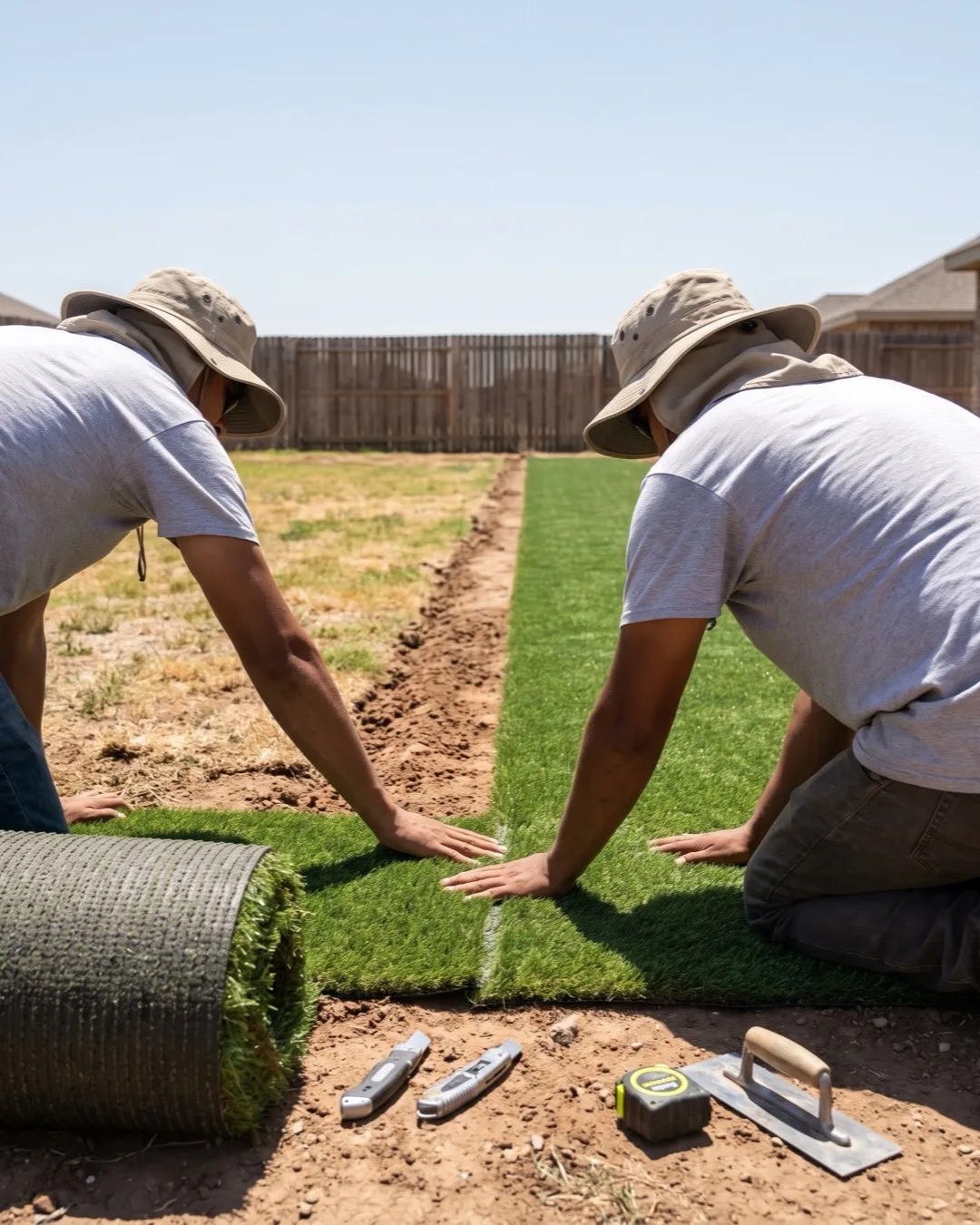
    Rolls are laid with the grain one direction, left to relax in the sun, then cut to the perimeter. Seams close on tape and adhesive. Edges fasten to bender board or a nailer board with galvanized spikes.

  5. Infill, brooming and walkthrough

    Infill is dropped and power-broomed in so the blades stand up and the surface sits firm. We blow the yard clean, walk the perimeter with you, and go over how to rinse and broom it.

Step one, the measure and the written price, costs nothing. Call (806) 630-0409 or get a free quote.

How Much Does Artificial Turf Cost in Lubbock?

Installed artificial turf runs about $5 to $20 per square foot nationally, and most residential jobs land in the middle of that band: at $8 to $14 per square foot, a 500-square-foot yard is roughly a $4,000 to $9,000 project.

Nobody can price your yard from a web page. The ranges below are published national figures, there so you can sanity-check any quote you're handed, including ours.

Typical installed cost per square foot, by job type (national ranges)
Job typeInstalled costWhat that looks like
Residential lawn replacement$8 to $14 / sq ftA typical 500 sq ft yard lands around $4,000 to $9,000
Pet turf and dog runs$10 to $18 / sq ftPremium fibers, flow-through backing, antimicrobial infill
Backyard putting greens$15 to $40 / sq ftA 500 sq ft green typically runs $7,500 to $20,000
Commercial turf$12 to $20+ / sq ftBigger footprints, so the ticket scales with square footage

Ranges above are national figures published by cost guides such as Angi and HomeGuide. They are not a quote. Your price comes from a measure of your yard.

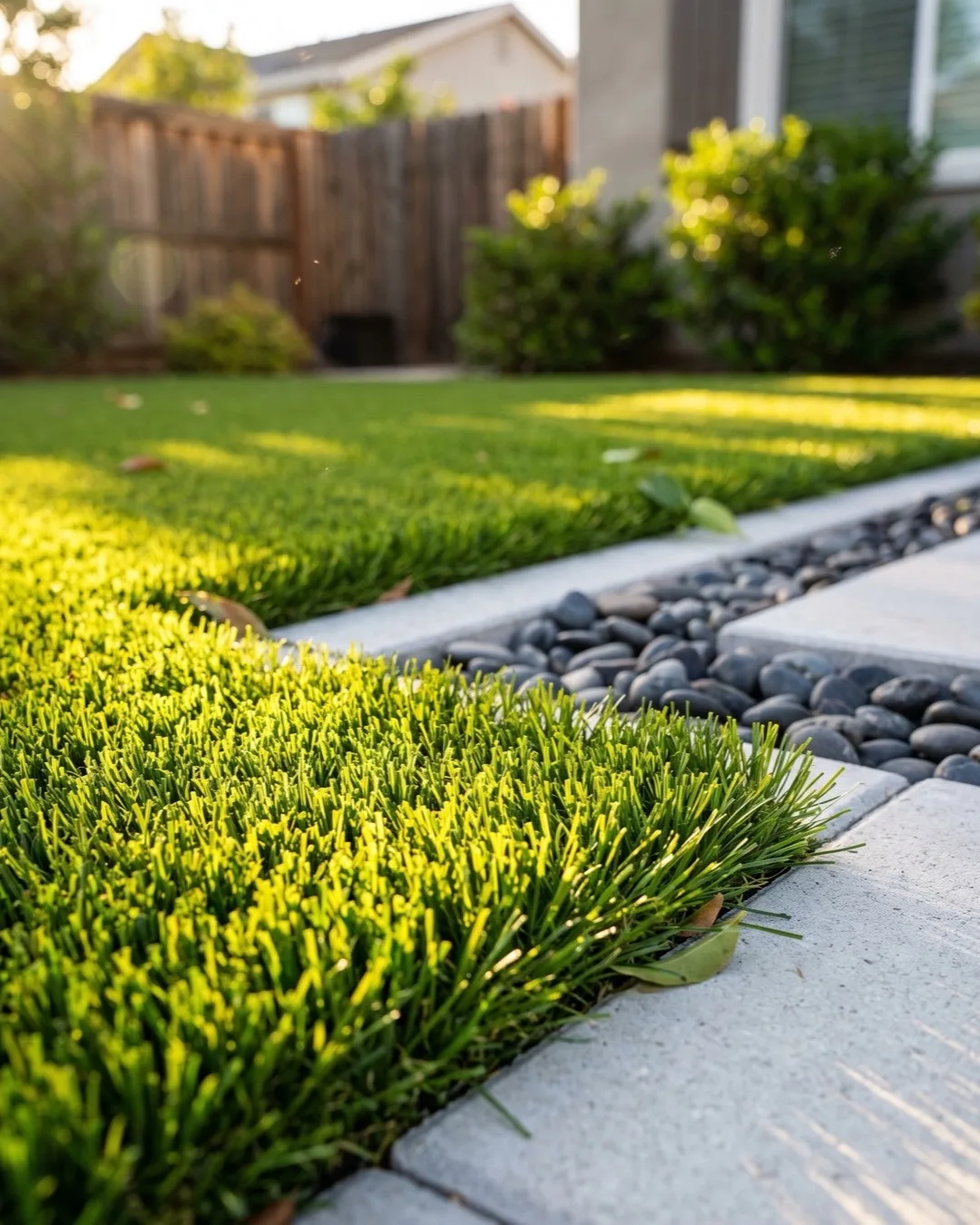
Close-up of artificial turf blades and infill at a paver borderGet a price for your yard

What moves the price up or down

Square footage and minimum job size

Cost per square foot drops as the area grows. Small side yards and patios often price higher per foot, because crew, equipment, and base delivery cost about the same at 150 feet or 1,500.

Turf spec

Pile height, face weight (ounces of yarn per square yard), and fiber type are the biggest single line item. Heavier, denser turf costs more per roll and holds up longer under traffic.

What has to come out first

Live sod, tree roots, old concrete, and buried rock all add demo hours and haul-off. A bare or already-dead yard is cheaper to start from.

Base depth and grading

More base and more compaction cost more. Slopes, low spots that pond, and yards with no gate wide enough for a wheelbarrow all add time.

Drainage work

Most yards drain fine on a properly built base. Some need a french drain, a drain box, or regrading first, and that's quoted separately.

Infill and add-ons

Antimicrobial pet infill, playground shock pads, putting cups and fringe collars, and paver or bender-board borders each move the per-foot number.

How Long Does an Artificial Turf Installation Take?

As a typical industry range, a residential yard runs two to three working days on site once the job starts. Here is where that time goes.

Typical installation phases and durations for a residential yard
PhaseTypical timeWhat happens
On-site measure & written quoteOne visit, about an hourMeasure the area, check drainage and gate access, price the job by the square foot
Demolition & excavationHalf a day to 1 dayOld sod, roots, and 3 to 4 inches of soil out; sprinkler heads capped and lines marked
Base build, compaction & gradingHalf a day to 1 dayCrushed base in, wetted and compacted in lifts, graded to fall away from the house
Turf layout, seaming & fasteningAbout 1 dayRolls relaxed, cut to the perimeter, seamed on tape, edges spiked to the nailer board
Infill, power brooming & walkthroughHalf a dayInfill broomed in, yard blown clean, final walkthrough and care rundown

These are typical industry ranges, not a schedule promise. Putting greens with contours, drainage work, and hard-access properties run longer. Your actual schedule comes in writing with the quote.

How West Texas Caliche, Wind and the Ogallala Aquifer Change a Turf Install

Dig a few inches down in many Lubbock yards and you hit caliche, a hardpan layer that doesn't soak up water the way topsoil does. That changes the excavation, and it means the compacted base under the turf, not the ground beneath it, has to do the draining. That's why we watch where water runs during the free measure.

Lubbock is the 10th-windiest city in the U.S., with winds averaging 12.4 mph per NWS climate normals, so perimeter fastening and infill weight aren't optional; a loose edge doesn't stay put here. The same normals put 92 days a year at 90°F-plus and around 13 days over 100°F, yet January still brings hard freezes; the record low is −17°F. The Weather Channel named Lubbock America's "Toughest Weather City" in 2013. Turf that lasts here needs UV-stabilized fiber and a base compacted well enough that freeze-thaw cycles can't heave it.

Water is the long game. Lubbock averages just 18.33 inches of rain a year per NWS climate normals and leans heavily on the Ogallala Aquifer, which is being drawn down at a long-term unsustainable rate; the city is adding a pipeline from Lake Alan Henry expected to supply 3.2 billion gallons annually. A yard that needs zero irrigation takes that line item off your summer water bill, and off the aquifer.

Get a Free Artificial Turf Quote in Lubbock

Send over the basics and a local turf pro calls you back with a price.

Rather talk it through? Call (806) 630-0409

Where We Install Artificial Turf Around Lubbock

Lubbock Artificial Turf covers Lubbock and the towns around it. Just outside this list? Call and ask, most of the South Plains is a short drive.

  • LubbockThe whole city, from established neighborhoods to new-build yards that never got a lawn.
  • WolfforthSouthwest of Lubbock. Newer subdivisions with wide open back yards and plenty of wind across them.
  • ShallowaterNorthwest of Lubbock, off US-84.
  • SlatonSoutheast of Lubbock, out toward Post.
  • IdalouNortheast of Lubbock on US-62/82.
  • LevellandWest of Lubbock, in Hockley County.

Not on the list? Call anyway. Turf crews travel for a full-yard job. (806) 630-0409

Commercial Artificial Turf in Lubbock

We install for property managers, businesses, and facilities around Lubbock, where the math is simple: no irrigation, no mowing crew, and a surface that looks the same in a February leasing photo as in June. Commercial work is quoted from plans or a site walk.

Apartment and HOA common areas

Courtyards, entry medians, pool decks, and on-site dog parks. Heavier face weight where residents walk it every day, plus a drainage build that survives a pressure washer.

Offices, retail and restaurant patios

Street-facing beds, patio floors, and rooftop decks. Turf keeps a frontage green straight through a watering restriction that would brown out sod.

Sports, gym and field turf

Batting cages, sled tracks, gym floors, practice areas, and small fields. Nylon or blended fibers, heavier infill, and shock pads where the sport calls for it.

Schools, daycares and parks

Play surfaces with impact padding underneath, plus turf on the strips that get walked bare by the end of a school year.

Managing a property around Lubbock? Ask for a site walk. Call (806) 630-0409 or get a free quote.

Get a Free Artificial Turf Quote in Lubbock

Send over the basics and a local turf pro calls you back with a price.

Rather talk it through? Call (806) 630-0409

Artificial Turf FAQs

What do most Lubbock homeowners end up paying for turf?

Installed turf runs roughly $5 to $20 per square foot nationally, and most residential lawn jobs land around $8 to $14, so a typical 500-square-foot yard runs about $4,000 to $9,000. Your number depends on square footage, turf spec, demo, and drainage. The measure and the quote are free.

Is artificial turf good for dogs?

Yes. Pet installs use a fully perforated backing, a base graded with no low spots, and an antimicrobial or zeolite infill instead of plain sand. Urine drains straight through and rinses off with a hose. No mud tracked inside, no dead patches.

Can artificial turf handle West Texas heat, wind, and freezes?

Yes. UV-stabilized fibers are built for full sun, and turf doesn't go dormant in a freeze or brown out in a drought. It warms up in direct August sun like any surface; a rinse or a shade sail brings it down. Wind isn't an issue once the perimeter is fastened and the infill is in.

How much water does artificial turf save?

Nearly all of it. Turf needs no irrigation; the only water it uses is the occasional rinse of a pet area. What that's worth depends on your yard size and your water rates, pull a July bill and work backwards.

How many days will the crew be in my yard?

As a typical industry range, two to three days: one for demo and base, one to two more for turf, seaming, and infill. Bigger yards, contoured greens, and drainage work run longer. You get the schedule with the quote.

How long does artificial turf last?

Manufacturers typically rate landscape turf for 15 to 20 years, and a properly built base usually outlasts the turf on top of it. Sun, traffic, and infill upkeep decide where in that range you land.

Does artificial turf drain properly?

Yes, through the perforated backing and out through the compacted base underneath. Drainage is a base problem, not a turf problem. A yard that ponds today needs that fixed before turf goes down, and it's one of the first things we check at the measure.

What maintenance does artificial turf need?

Very little. Blow off leaves, rinse pet areas, and power broom the high-traffic paths once or twice a year. Infill gets topped off every few years. No mowing, no watering, no seeding, no fertilizer.

Wondering what your yard would cost?

Call for a free measure and a written price. If the number doesn't work, there's no next step.

(806) 630-0409
Call (806) 630-0409